Ask a serious Kolkata biryani fan where the best plate in the city actually is, and don’t be surprised if they tell you to catch a train. Not to Park Street. Not to New Market. To Barrackpore biryani country, a quiet cantonment town nearly 25 km north of the city, better known in history books for the 1857 uprising than for its food.
It’s a strange pairing. A town famous for military history ends up famous for biryani instead. Once you dig into how that happened, it turns into one of Kolkata’s more interesting food stories, one that actually starts almost a century earlier, in a completely different part of the city.
Table of Contents
Where Kolkata Biryani Actually Began — Chitpur, Not Barrackpore
Before Barrackpore entered the picture, Kolkata’s biryani story was already being written near Nakhoda Masjid in Chitpur.
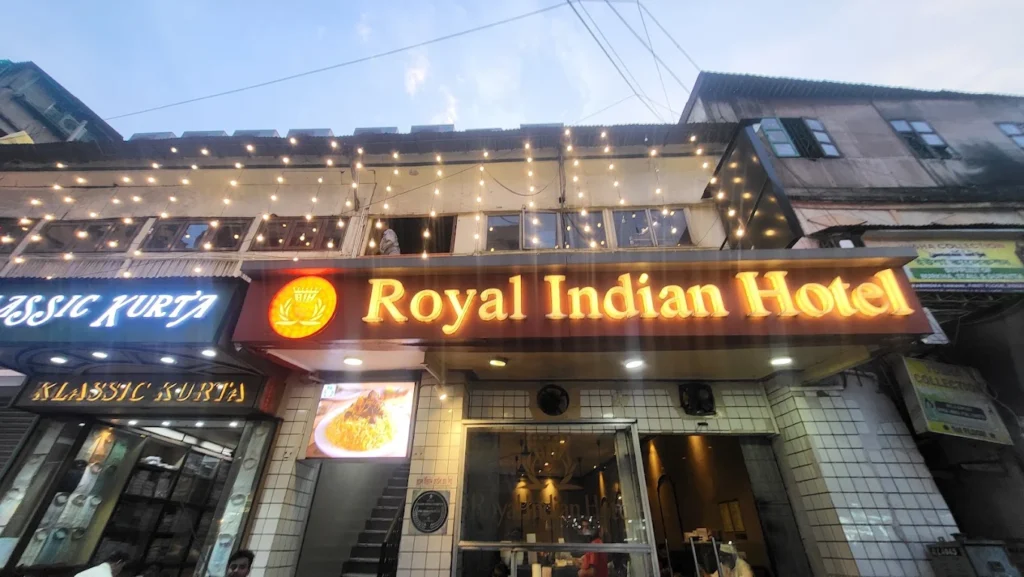
Royal Indian Hotel and the Original Lucknowi-Style Biryani
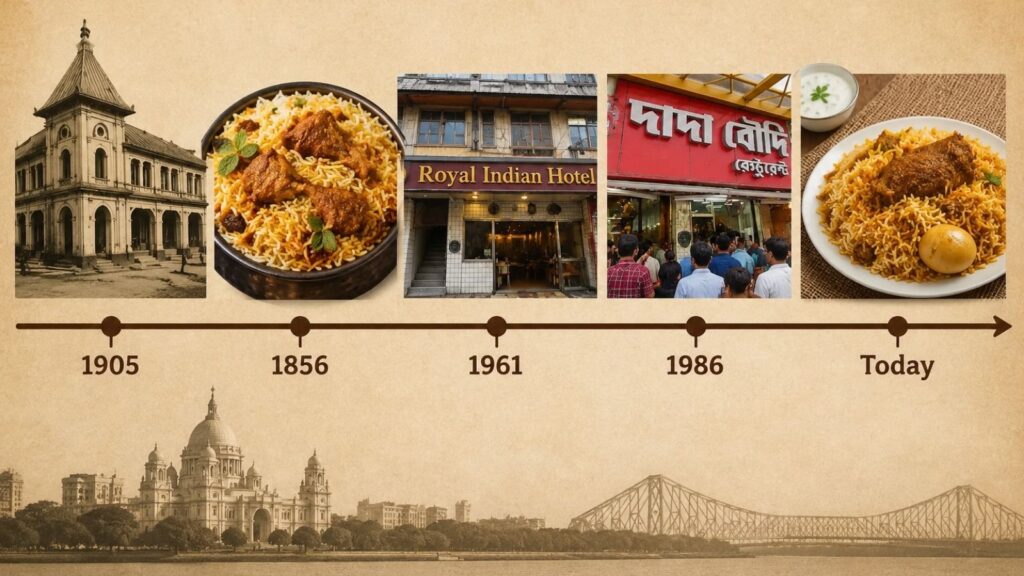
Royal Indian Hotel opened here in 1905, started by Ahmed Hussain, a man who had moved to Kolkata from Lucknow. It’s still considered the city’s oldest surviving Mughlai restaurant.
Interestingly, biryani wasn’t even on the menu at first. The restaurant began with three dishes — mutton chaap, mutton qalia, and khushka, a fragrant yellow pulao. Biryani was added later, in the 1940s, by Hussain’s son, Mehboob Ali.
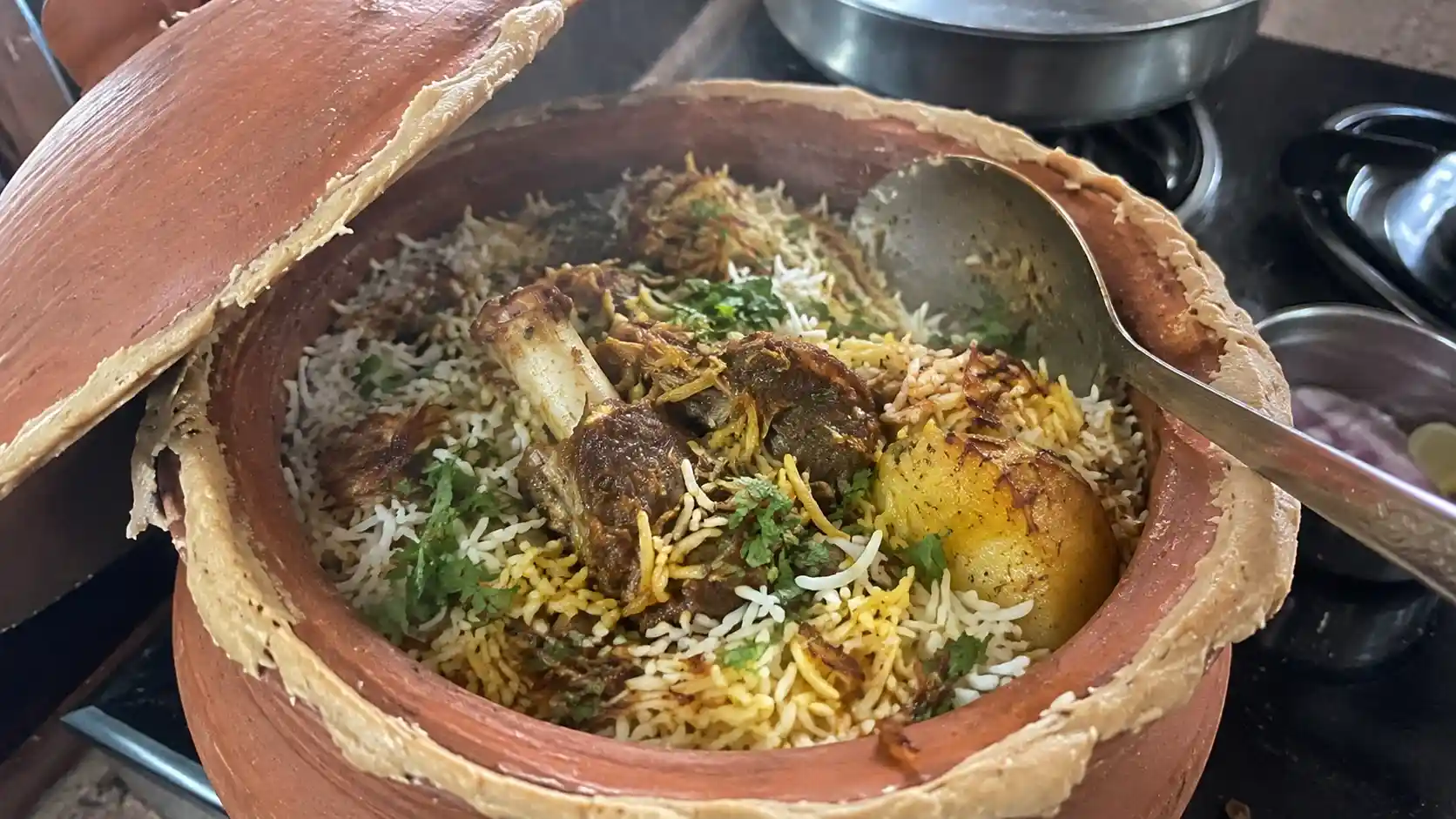
When it did arrive, it stayed close to its Lucknowi roots — just meat, rice, and whole spices. No potato. No boiled egg. That’s worth remembering, because the version most of us picture today looks quite different.
The Potato Story — Wajid Ali Shah’s Exile
The potato now considered essential to Kolkata biryani has a separate origin story. When Nawab Wajid Ali Shah was exiled to Kolkata in 1856, his royal cooks reportedly had to stretch a limited meat supply, so they began adding potato and egg to the dish.
Over the decades, that adjustment spread across the city’s biryani houses and became a defining feature of the local style. So the “Kolkata touch” everyone associates with biryani today didn’t start as a recipe choice — it started as a practical fix.
Chitpur is where this story begins. But to understand how it turned into a full-blown biryani destination, you have to go north.
Read More: Why Does Kolkata Biryani Have Potato?
The Family That Built Barrackpore’s Biryani Reputation
Barrackpore’s biryani story really comes down to one restaurant: Dada Boudi.
From Janata Hindu Hotel to Dada Boudi (1961–1986)
In 1961, Ramprasad Saha, who had migrated from Motihari in Bihar, opened a modest 200-square-foot eatery near Barrackpore railway station called Janata Hindu Hotel. It served railway workers and daily labourers simple, filling meals — nothing that hinted at what was coming.
The turning point came in 1986. Ramprasad’s grandsons, Sanjib and Rajib Saha, still teenagers at the time, decided to try adding biryani to the menu.
The ₹5,000 Bet That Paid Off
They started small — an estimated ₹5,000 investment, a few cooking vessels, some basmati rice, and just enough mutton to make about three kilos of biryani a day. It caught on fast.
People talked about the size of the mutton piece, the generous potato, and portions that genuinely felt worth the wait. That reputation didn’t fade — it grew steadily through the 1990s and 2000s. Today, Dada Boudi’s outlets reportedly sell close to 700 kg of biryani daily, on a recipe that hasn’t changed much since the 1980s.
Why Barrackpore, Specifically? Four Reasons It Worked
Railway Footfall on the Sealdah Line
Barrackpore station sits on a busy Sealdah suburban route. That meant a steady stream of commuters and travellers passed these shops every single day — the kind of consistent foot traffic no advertising budget could buy.
Portion-to-Price Value
Barrackpore biryani built its name on generous servings at prices lower than what you’d typically pay closer to the city centre. In a place where biryani is more of a weekly treat than an everyday habit, that combination matters.
One Success Story Lifting a Whole Neighbourhood
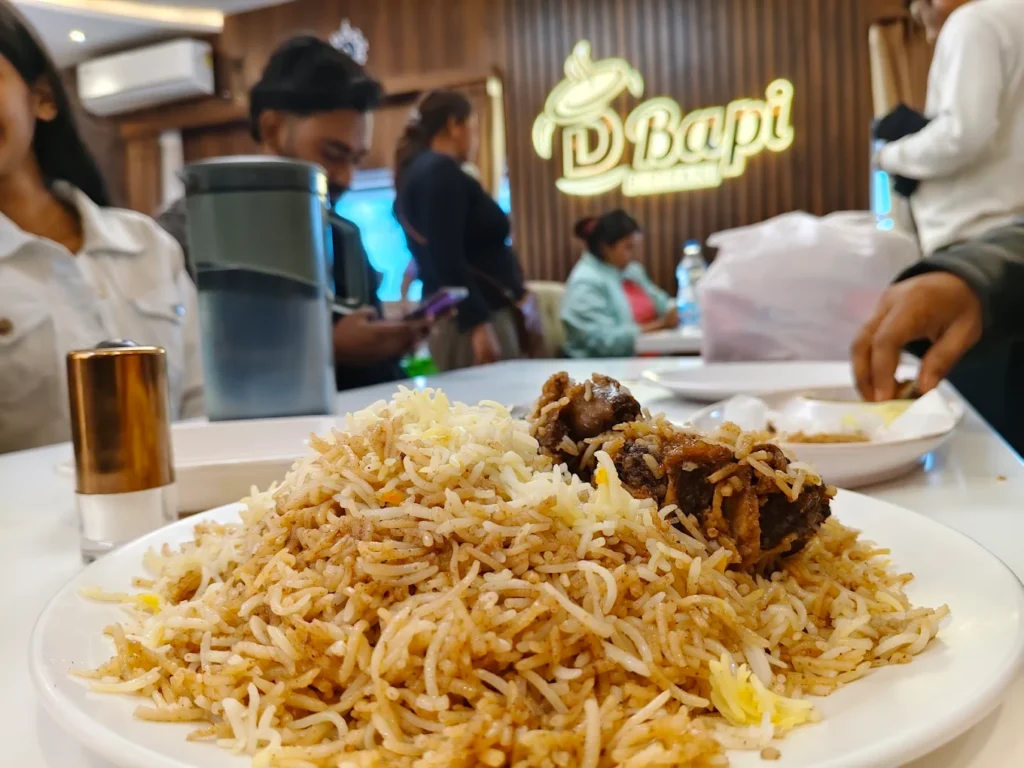
Once Dada Boudi became a name people would travel for, nearby restaurants inherited a ready-made customer base. Hayat, the local Aminia outlet, D Bapi Biryani, and smaller joints near Chiriamore all grew alongside it, feeding off the same reputation.
Word of Mouth Before Social Media
This reputation was built well before food blogs and Instagram existed. It spread through train conversations, office debates, and family dinner arguments — the slow kind of word of mouth that’s hard to fake and even harder to buy.
Where Locals Actually Eat in Barrackpore Today
| Restaurant | Known For | Good For |
|---|---|---|
| Dada Boudi | Large mutton piece, generous potato, big rice portions | The classic Barrackpore experience — go early, it fills up fast |
| Hayat | Consistent quality, loyal regulars | Those who find Dada Boudi’s queues too long |
| Aminia (Barrackpore outlet) | Softer rice, milder spice | Diners who want classic Kolkata style without extra heat |
| D Bapi Biriyani | Moist, spicier “gila cut” biriyani | Honest pricing, less polished seating |
| Punjab Restaurant & Madras Tiffin | Broader menu beyond biriyani | Groups with mixed food preferences |
How Barrackpore Biryani Differs From South Kolkata’s Style
If you’re used to the gentler, more aromatic biryani common in South Kolkata neighbourhoods like Jadavpur, Barrackpore’s version will feel like a different dish altogether. It leans heavier on spice, bigger on portion size, and less on the delicate kewra-and-saffron fragrance that defines the softer Kolkata style.
Neither is “better” — they’re built for different moods. If you want to understand what makes the South Kolkata style distinct, our guide to the best biryani in Jadavpur breaks down what to actually look for on your plate.
Practical Tips If You’re Making the Trip
- Go early, especially at Dada Boudi. Lunch hour gets crowded fast, and popular cuts sell out.
- Take the Sealdah suburban train. It’s usually faster and cheaper than driving via BT Road during peak hours.
- Carry cash. Smaller Barrackpore eateries don’t always have reliable card or UPI setups.
- Go with an appetite. Portions here are noticeably larger than what you’d get at most city-centre restaurants.
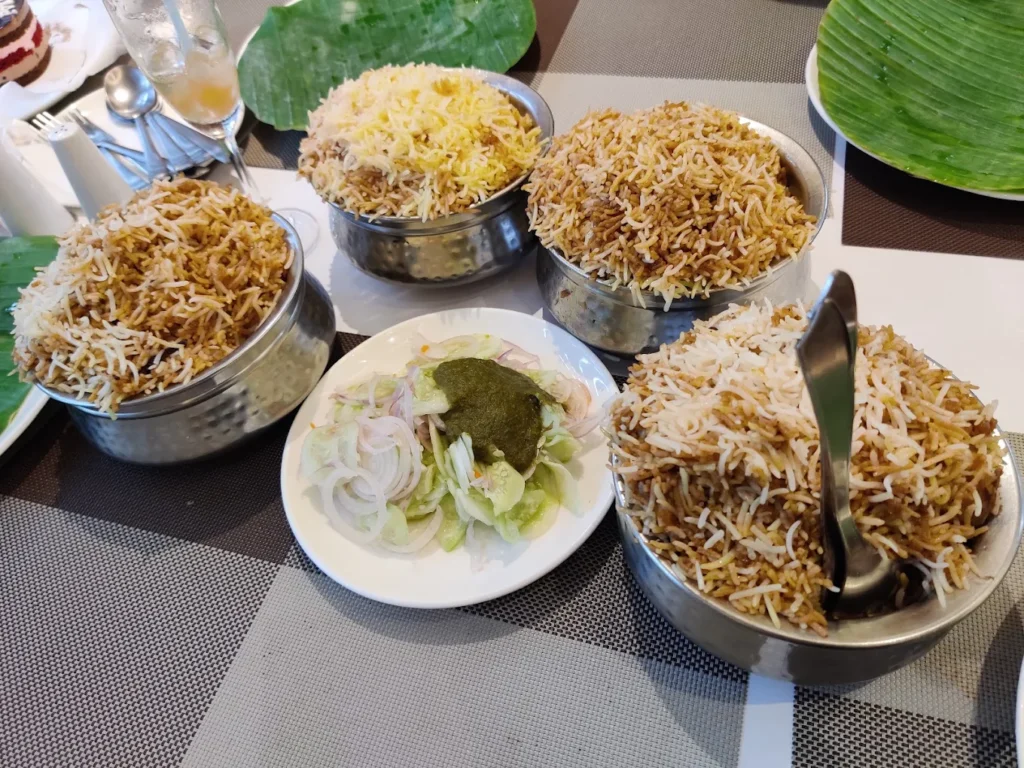
- Pair it right. A simple onion-cucumber salad and raita balance the richer, spicier profile better than another heavy side.
Final Thought
Kolkata’s biryani story didn’t begin in Barrackpore — it began in Chitpur, in the kitchens of an exiled Nawab and a restaurateur from Lucknow. But it grew up in Barrackpore, inside a 200-square-foot shop that decided, almost on a whim in 1986, to try something new.
That’s usually the part most food write-ups skip. And it’s the part that actually explains why people still make the trip north for a plate of biryani today.
Why is Barrackpore famous for biryani?
It’s largely down to one restaurant, Dada Boudi, which added biryani to its menu in 1986 and built a reputation for generous portions and bold flavour. That success pulled other local eateries up with it, turning the area into a biryani destination over the following decades.
Is Barrackpore biryani better than biryani in central Kolkata?
It depends on what you’re comparing it to. Central Kolkata spots lean toward a more traditional, Lucknowi-influenced style, while Barrackpore’s version — led by Dada Boudi — is heartier, spicier, and built around bigger portions at lower prices.
Who started Dada Boudi biryani?
The restaurant traces back to Ramprasad Saha, who opened a small eatery near Barrackpore station in 1961. His grandsons, Sanjib and Rajib Saha, added biryani to the menu in 1986, which became the restaurant’s defining dish.
What is the oldest biryani restaurant in Kolkata?
Royal Indian Hotel in Chitpur, near Nakhoda Masjid, opened in 1905 and is widely considered the city’s oldest surviving biryani restaurant.
Why does Kolkata biryani have potato in it?
The tradition is linked to Nawab Wajid Ali Shah’s exile to Kolkata in 1856, when his cooks reportedly added potato and egg to stretch a limited meat supply. Over time, it became a defining part of the Kolkata style.
How far is Barrackpore from Kolkata, and how do I get there?
It’s about 25 km from central Kolkata, roughly a 45-minute to one-hour trip by suburban train from Sealdah, or by road via BT Road.