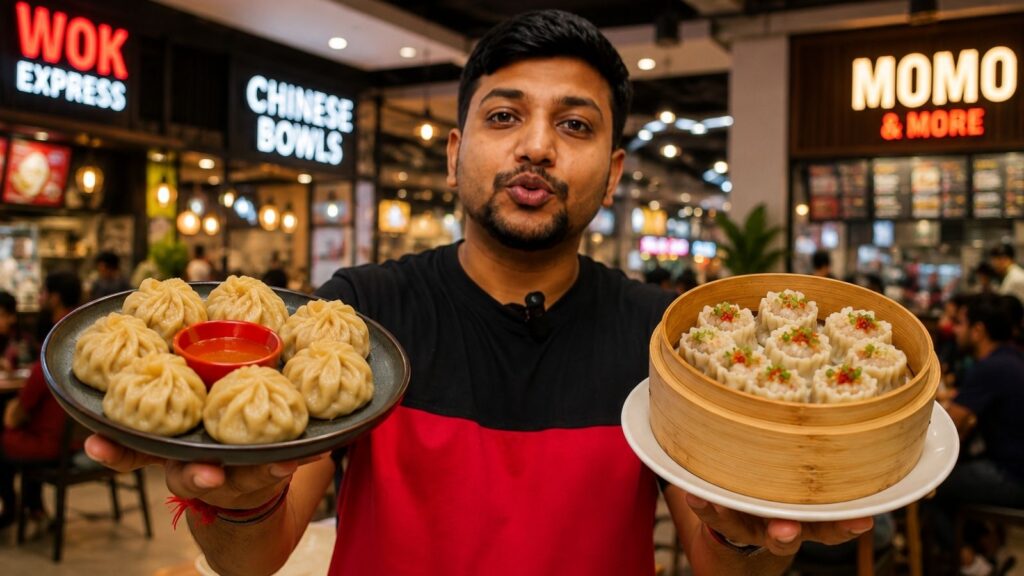
For years, I called everything the same thing.
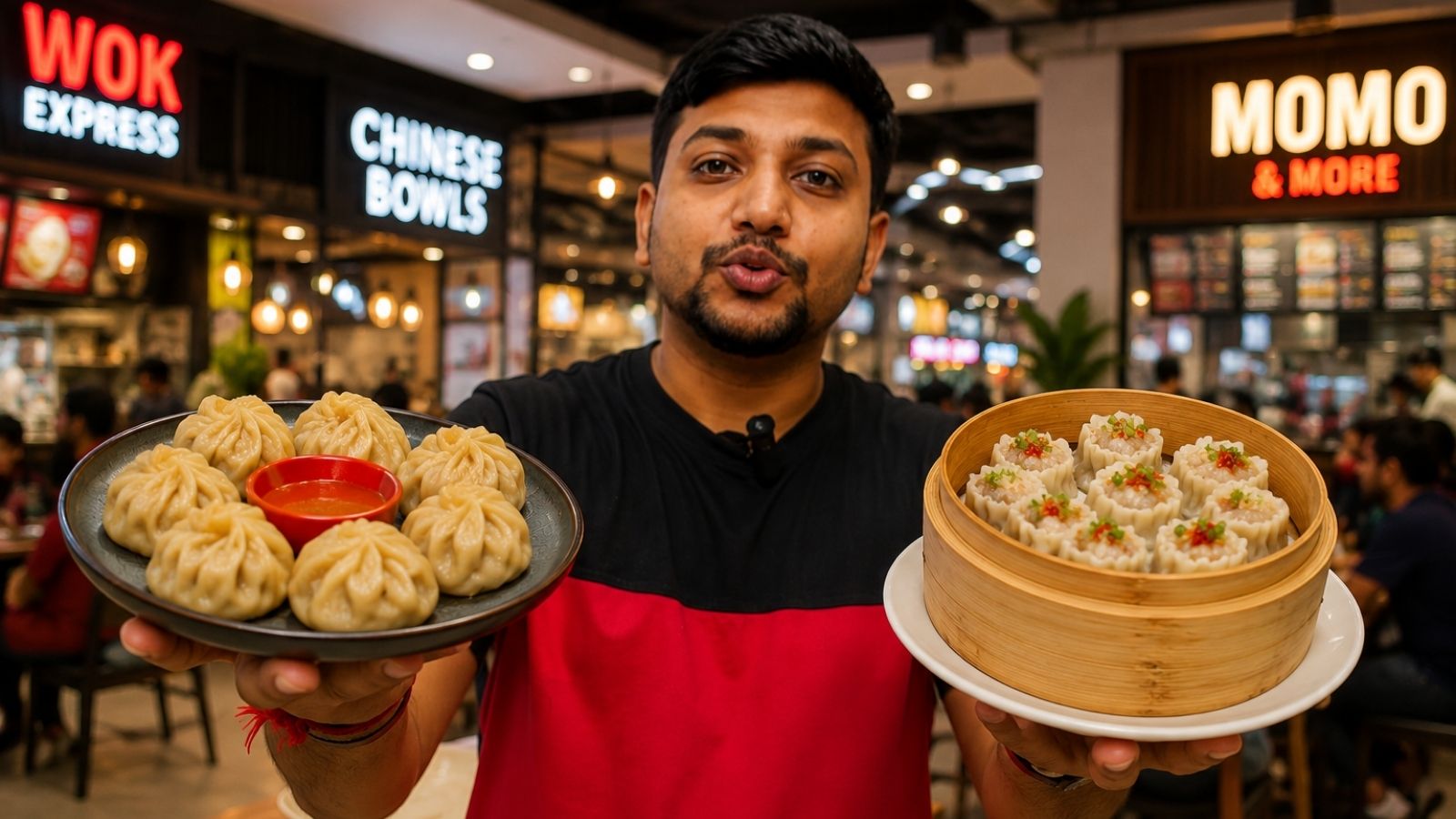
Steamed, served in a bamboo basket, dipped in chutney, momo. Sitting in a restaurant, same bamboo basket, fancy menu, dimsum. In my head, it was the same dish wearing different clothes depending on where you were eating it. Street stall version was a momo. Restaurant version was a dimsum. Simple.
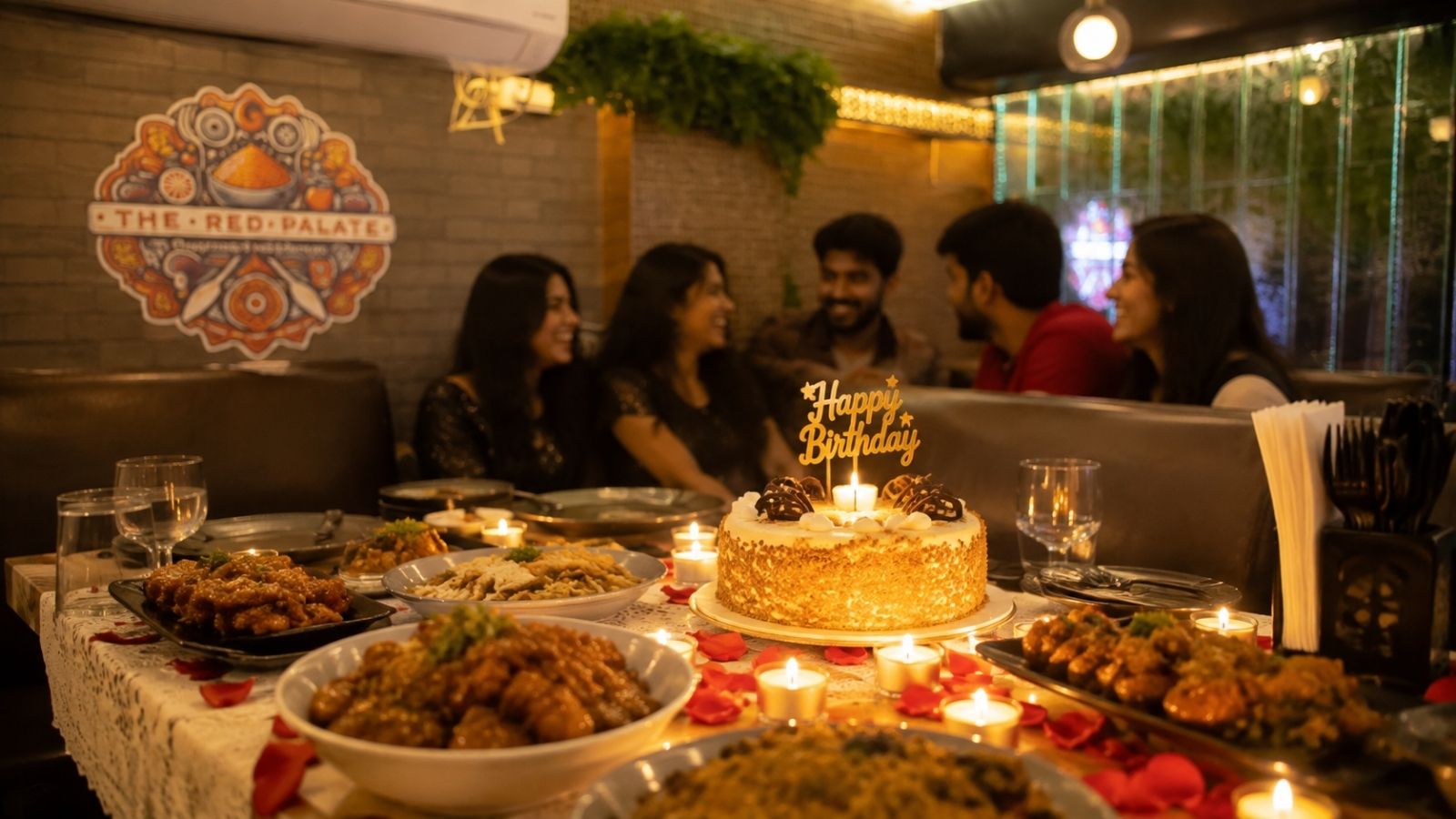
Turns out I was wrong. And not slightly wrong, completely, embarrassingly wrong. The first time someone actually explained the difference to me, I was sitting at a table here at The Red Palate, and a regular customer, the kind who’s been eating here for years and actually knows his food, pointed at what I’d just served him and said, “You know these are not the same thing, right? Like at all.”
That conversation stuck. I went back, did the reading, talked to people who actually know where these dishes come from — and what I found out changed how I look at both of them completely.
So here it is. The real difference between Momos and Dimsums — no textbook explanation, no Wikipedia copy-paste. Just what you actually need to know, with a Kolkata lens on it.
Table of Contents
They Don’t Even Come From the Same Part of the World
This is where it starts. And this is the part most people skip.
Momos are Himalayan. Full stop. They came from Tibet, travelled through Nepal, rolled down into the Northeast — Sikkim, Darjeeling, Assam — and eventually made their way into every city in India. The food was built for cold mountain weather. Filling, warming, heavy enough to keep you going. Simple dough, bold stuffing, eaten fast. That’s the momo’s DNA — practical, no-nonsense, honest food.
Dimsums are Cantonese. Completely different geography, completely different story. Dimsum grew out of the Yum Cha culture of southern China — specifically the tea houses that sat along the Silk Route where traders would stop, drink tea, and eat small bites of food. The word dimsum itself roughly means “touch the heart” in Cantonese. It was never meant to be one dish. It was a whole way of eating — multiple small plates, slow meal, always with tea, always social.
Now here’s the Kolkata connection — and this is the part that makes this city special.
Kolkata got both. The Hakka Chinese who settled in Tangra brought the Cantonese cooking tradition with them — that’s where Kolkata’s dimsum culture came from. The momo came in through a completely different route — through the Northeast, through the Bengali connection with Darjeeling and Sikkim, through the hill-station food culture that slowly made its way down to the city. Two completely different journeys. Same city. Same bamboo steamer basket on the table.
That’s Kolkata for you.
Momos vs Dimsums: The Dough Is Where the Real Difference Lives
Most people look at the filling and think that’s what separates them. It’s not. It starts with the dough.
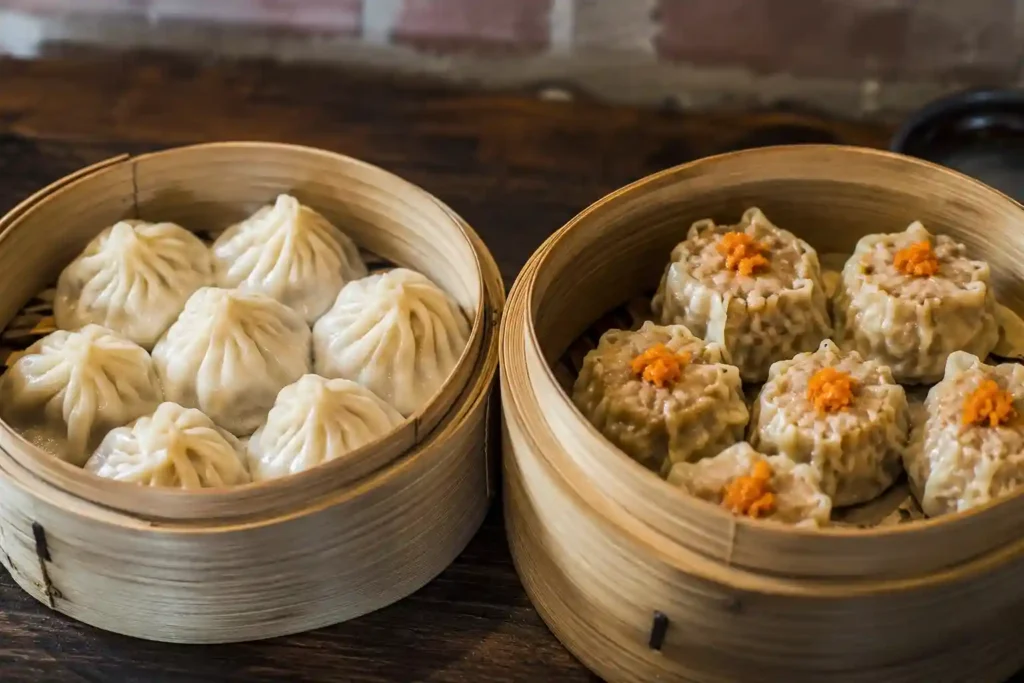
Momo dough is simple. Refined flour, water, a pinch of salt — that’s it. The wrap is thicker, sturdier, meant to hold a dense filling without falling apart. When you bite into a momo, the dough has some chew to it. It’s not trying to disappear — it’s part of the experience.
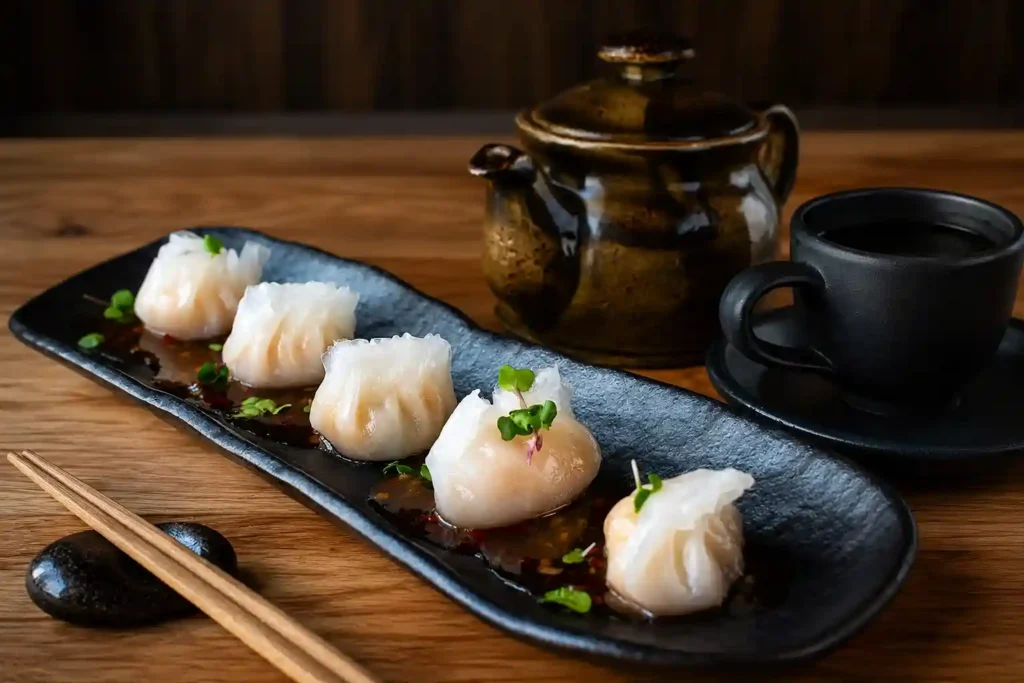
Dimsum dough is a different thing entirely. Depending on the dimsum, the wrap could be made from rice starch, potato starch, wheat starch, or a combination of all three. That’s why a good har gow (the classic prawn dimsum) is almost see-through — you can see the pink of the prawn through the skin. Thin, delicate, slightly translucent. The skin is engineered to get out of the way and let the filling do all the talking.
This is also why dimsum is harder to make well. Anyone can roll a momo wrap. Getting a dimsum skin right — the right thickness, the right translucency, the right amount of chew — that takes practice and a very different set of ingredients.
At The Red Palate, we don’t cut corners on either. The momo wrap is made fresh, rolled to the right thickness so it holds but doesn’t overwhelm. The dimsum skin is a whole separate process. Two different doughs, two different days, two different approaches entirely.
Same Basket, Completely Different Filling Philosophy
Here’s where the personality of each dish really shows up.
Momo fillings are bold. Minced chicken, pork, or vegetables — mixed with cabbage, onion, garlic, ginger, sometimes a touch of soy or chilli. The filling is seasoned to be juicy and satisfying. You want it to hit. One bite of a good momo and you know exactly what’s inside — no guessing, no subtlety, just flavour that punches.
Dimsum fillings are conversations, not statements. The prawn har gow has prawns, bamboo shoots, and a touch of sesame — every ingredient chosen to complement the others without any one of them shouting. A siu mai has pork, prawn, a touch of mushroom — perfectly balanced so each element is present but nothing dominates. Dimsum fillings are built on restraint. The idea is that you should be able to taste each ingredient separately inside the same bite.
One is a complete meal compressed into dough. The other is a tasting experience wrapped in dough.
Neither is better. They’re just doing completely different things.
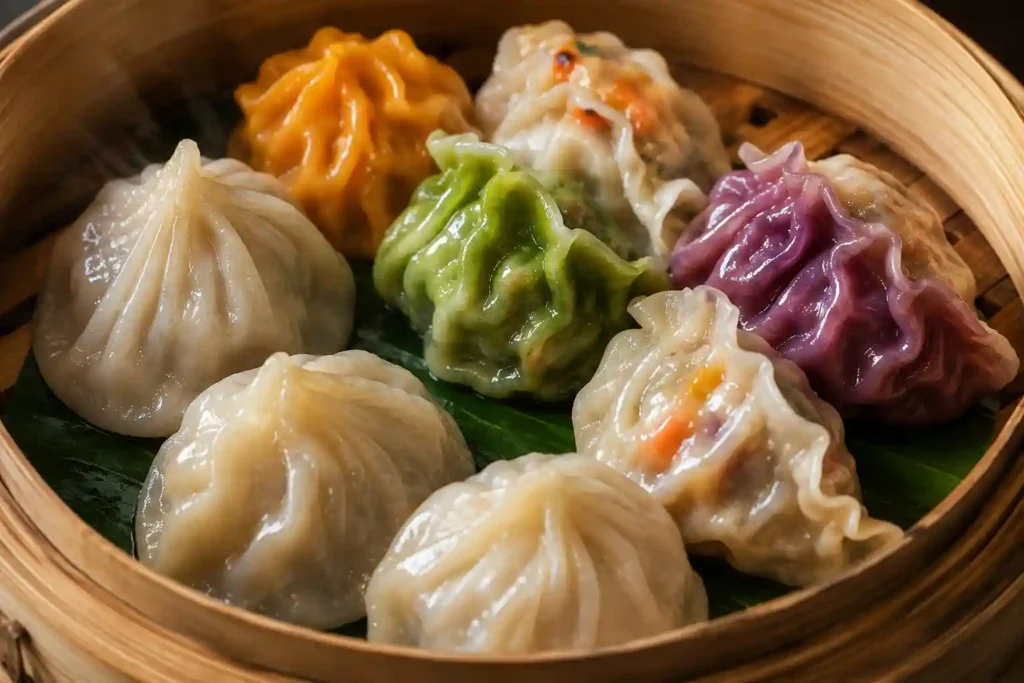
Here’s the Part That Confuses Everyone
Momos and Dimsums are not the same category of food. This is the single most important thing to understand.
Dimsum is not a dish. It’s a category.
Under the dimsum umbrella you have — har gow (prawn dumplings), siu mai (open-topped pork dumplings), cheung fun (rice noodle rolls), turnip cake, spring rolls, bao buns, egg tarts. None of these look like what most Indians picture when they say “dimsum.” But all of them are dimsum.
A momo is one specific thing — always stuffed, always dough-wrapped, always from that Himalayan tradition. It fits inside the dimsum category the same way Chilli Chicken fits inside the Indo-Chinese category. It’s one dish inside a much bigger family.
So technically — all Momos are Dimsums. But all Dimsums are absolutely not Momos.
As a Kolkata-based chef put it — Momos can be called Dimsum, but all Dimsums cannot be called Momos. That one line is the clearest way to understand it.The street stall vs restaurant framing — where the same thing is a “momo” on a plastic plate and a “dimsum” in a bamboo steamer — that’s a real thing in Kolkata. But it’s not the actual difference. The actual difference goes much deeper than the plate it’s served on.
How You Eat Them Is as Different as the Food Itself
This matters more than people think.
Dimsum is a slow meal. The Yum Cha tradition it comes from was built around spending two hours at a tea house, ordering small plates one at a time, drinking tea between bites, talking, eating, drinking, talking again. You don’t rush dimsum. The tea is not optional — it’s part of how the meal is supposed to work. The fat cuts through the richness of the pork. The light broth resets your palate. The whole thing is designed to be a long, social, leisurely experience.
Momos are fast food. Not in the McDonald’s sense — in the street sense. You’re standing at a stall, or sitting on a plastic chair, and the plate comes out hot and you eat it immediately. The chutney — fiery red tomato-chilli, or the sesame-based darker version — is not a garnish. It’s a necessary part of the bite. Momo without chutney is a car without an engine. It technically exists but it’s missing the point entirely.
At The Red Palate, we serve both the way they’re supposed to be served. The dimsums come with tea, with intention, with the time to appreciate what’s on the plate. The momos come hot, fast, with chutney that bites back.
Momos vs Dimsums — The Full Breakdown
| Category | 🥟 Momos | 🍱 Dimsums |
|---|---|---|
| Origin | Tibet, Nepal, Himalayan belt | Cantonese China, Yum Cha culture |
| Dough | Thick refined flour wrap | Thin rice / potato / wheat starch skin |
| Filling Style | Bold, juicy, heavily seasoned | Delicate, balanced, ingredient-forward |
| Category | One specific dish | An entire category of food |
| Served With | 🌶️ Fiery chutney — always | 🍵 Tea — always |
| Eating Style | Fast, street food energy | Slow, social, tea-house tradition |
| Texture | Chewy wrap, dense filling | Thin skin, light delicate filling |
| Price Point | Affordable — street to mid-range | Mid-range to premium |
| In Kolkata | Every street corner | Tangra restaurants, fine dining |
| Heat Level | 🔥🔥🔥 | 🌡️ Mild to medium |
| Are They the Same? | All Momos are Dimsums — but NOT all Dimsums are Momos | |
| 📍 The Red Palate, Kolkata | Where both get the respect they deserve | ||
What to Order at The Red Palate — Momos or Dimsums?
Honest answer — order both. But if you’re coming for the first time and you have to pick a lane, here’s the guide:
Order Momos if: You want something filling and fiery. You’re eating as a meal, not a starter. You want that chutney hit. You’re a spice person. You want the Kolkata street-food experience on a proper plate.
Our Momo picks: Chicken Momo (steamed, classic), Pan-Fried Pork Momo, Veg Momo with Schezwan chutney.
Order Dimsums if: You want to slow down and actually taste what you’re eating. You’re starting a longer meal. You want something lighter, more refined. You’re curious about what Cantonese cooking actually tastes like under all the Indo-Chinese spice.
Our Dimsum picks: Prawn Har Gow, Chicken Siu Mai, Water Chestnut and Mushroom Dimsum.
And if someone tells you they’re the same thing — show them this blog.
Final Word
Momos and Dimsums are not rivals. They’re not even in the same race. One came down from the mountains, built to warm you up and fill you fast. The other came from tea houses along ancient trade routes, built to be savoured slowly over a long afternoon.
Kolkata is one of the only cities in India where you can eat both — properly, authentically, on the same street — because this city has always known how to carry two food cultures at once without either of them losing what makes them special.
Come to The Red Palate. Order both. Eat slowly on the dimsum side. Eat fast on the momo side. And the next time someone tells you they’re the same thing, you’ll know exactly what to say.
Are Momos and Dimsums the same thing?
No. They come from different countries, different food cultures, and different culinary traditions. The confusion happens because both are steamed, both are dough-wrapped, and both are served in similar bamboo steamers. But the dough, the filling philosophy, and the culture around eating them are completely different.
Which is healthier — Momos or Dimsums?
Both are steamed, so neither is fried. Dimsums tend to be lighter on seasoning and use thinner skins, so they’re slightly lower in calories per piece. Momos are more filling and dense. Neither is junk food — both are reasonable choices if you’re watching what you eat.
Why are Dimsums more expensive than Momos?
he ingredients, the technique, and the time. Dimsum skins require specific starches that are more expensive than plain flour. The fillings use ingredients like prawns, bamboo shoots, and water chestnuts. And the folding — a proper har gow pleat takes skill and practice. You’re paying for all of that.
Can Momos be called Dimsums?
Technically yes — Momos fall under the broader dimsum category. But calling a dimsum a momo is wrong. Dimsum is the parent category. Momo is one dish inside it.
What does Dimsum mean?
It’s Cantonese for “touch the heart.” Originally the small dishes served at Yum Cha tea houses along the Silk Route in southern China. The idea was food that was light enough to accompany tea but satisfying enough to keep traders going.
What is the best Dimsum in Kolkata?
The Tangra area has historically been the home of Kolkata’s best dimsums — the Hakka Chinese influence is still alive there. Beyond Tangra, The Red Palate’s Prawn Har Gow and Water Chestnut Dimsum are the two worth going for if you’re eating with us.